
 Available in US
How to Find Reliable Betting Tips & Avoid Scams

The betting tips industry is worth billions, and most of that money flows from desperate bettors to smooth-talking fraudsters. Get the most accurate winning wagering tips available today. That’s the uncomfortable reality nobody wants to discuss. Scroll through Twitter for five minutes and you’ll find dozens of accounts posting screenshots of winning bet slips, promising “guaranteed profits,” and charging monthly fees for access to their “VIP predictions.” The vast majority are running variations of the same scam, and they’re counting on you not knowing how to verify their claims.
Here’s what actually happens behind the curtain. A scammer creates ten different betting tip accounts. Each account makes opposite predictions on the same matches. After a weekend of football, five accounts will have picked mostly winners purely by chance. The scammer deletes the five losing accounts and continues posting from the winning ones, which now appear to have impressive track records. Add some Photoshopped screenshots, a few fake testimonials, and suddenly they’re selling subscriptions to gullible bettors who think they’ve discovered a hidden goldmine.
The problem isn’t just the obvious scammers. Even legitimate tipsters with genuine expertise face incentive problems that compromise the value they provide. A tipster who charges subscription fees makes money regardless of whether their tips actually win. Their business model rewards marketing ability and subscriber retention more than betting accuracy. A tipster who accepts bookmaker affiliate commissions profits when you sign up and bet, whether you win or lose. These structural issues mean that even honest tipsters often provide tips that don’t genuinely help your bankroll over time. Combine these picks with a solid bankroll management system for long-term success.
So how do you navigate this minefield? How do you separate the tiny percentage of legitimate betting intelligence from the ocean of garbage, scams, and well-intentioned incompetence? That’s exactly what this guide addresses. You’ll learn systematic verification methods that cut through marketing hype and self-reported claims. You’ll understand the incentive structures that determine tipster behavior. You’ll build processes for evaluating track records that reveal genuine skill versus lucky variance. Most importantly, you’ll develop the skeptical mindset that protects your money from the predators who populate this industry.
Understanding the Tipster Ecosystem
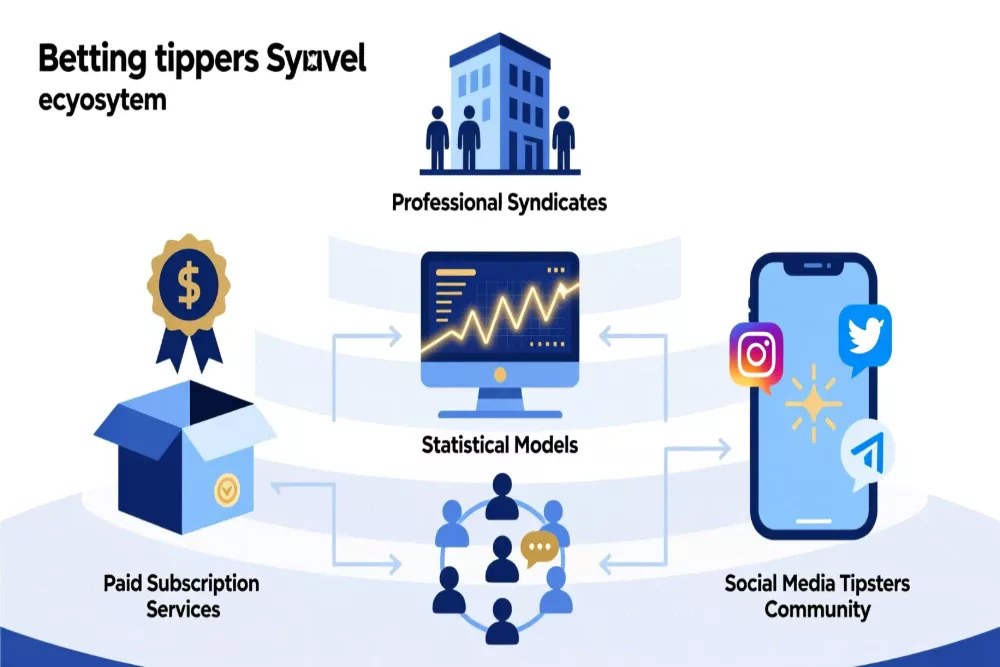
Before diving into verification methods, you need to understand the landscape you’re navigating. The betting tips ecosystem includes several distinct categories of participants, each with different business models, incentive structures, and average quality levels. Knowing which type of tipster you’re evaluating changes how you assess their credibility and usefulness.
Free tipster communities represent the largest and most accessible category. Platforms like OLBG, BettingExpert, and various Reddit communities host thousands of individuals sharing tips without charging fees. The quality variance in these communities is enormous. Some tipsters are genuinely knowledgeable bettors sharing analysis to help others or to build reputations. Others are recreational bettors with minimal expertise posting tips for entertainment or attention. The best free tipster platforms implement verification systems, track records, and competitive elements that surface quality contributors while making it harder for charlatans to prosper.
The advantages of free communities include zero financial risk in following tips, transparent track records on well-run platforms, and diverse perspectives from many tipsters. The disadvantages stem from lack of quality control, incentive misalignment when tipsters earn bookmaker affiliate commissions, and the time required to identify the small percentage of genuinely skilled tipsters among the noise.
Paid tipster services charge subscription fees ranging from twenty dollars monthly to several hundred for “premium” access. The theory is that charging money ensures serious analysis and filters out casual tippers. The reality is more complicated. Some paid services deliver genuine expertise through sophisticated statistical models, deep sport knowledge, or information edges. Many paid services are just monetizing mediocre tips that perform no better than chance. Some are deliberate scams with fabricated track records designed to extract money from naive bettors before disappearing.
The paid tipster business model creates specific problems. Since revenue comes from subscriptions regardless of betting outcomes, these services prioritize subscriber acquisition and retention over actual betting performance. This leads to marketing-heavy approaches, selective reporting of results, and sometimes outright fraud. A struggling paid service has strong incentive to falsify their track record rather than admit their tips aren’t working, because honesty means losing subscribers and income.
Individual tipsters on social media platforms like Twitter, Instagram, and Telegram represent another major category. These range from legitimate professional bettors sharing genuine analysis to pure scammers running the multiple-account scheme described earlier. Social media tipsters are particularly difficult to verify because the informal platform makes it easy to post tips selectively, delete losing predictions, or simply lie about past results without obvious consequences.
Betting syndicates and professional handicapping services occupy the high end of the market. These operations employ teams of analysts, build sophisticated statistical models, and sometimes have genuine information advantages. The best are actually profitable long-term and share real expertise with clients. Access typically costs hundreds or thousands monthly, putting them out of reach for most recreational bettors. Even at this level, scams exist, so verification remains essential.
Statistical modeling services use algorithms and machine learning to generate predictions. Quality varies wildly. Some use genuinely sophisticated approaches that beat the market consistently. Others are built by people with minimal statistical understanding who’ve overfit models to historical data without proper validation. The black-box nature of many modeling services makes verification particularly challenging, since you’re evaluating the model rather than understanding the reasoning behind each tip.
Understanding these categories helps you calibrate expectations appropriately. A free tipster community member isn’t competing with professional syndicates, so expecting institutional-quality analysis is unrealistic. A paid service charging twenty dollars monthly probably isn’t employing teams of PhDs building cutting-edge models, so be skeptical of claims suggesting that level of sophistication. A social media tipster posting tips for free likely has motivations beyond helping your bankroll, whether that’s building an audience for eventual monetization or simply enjoying the attention.
Red Flags That Identify Scams Immediately
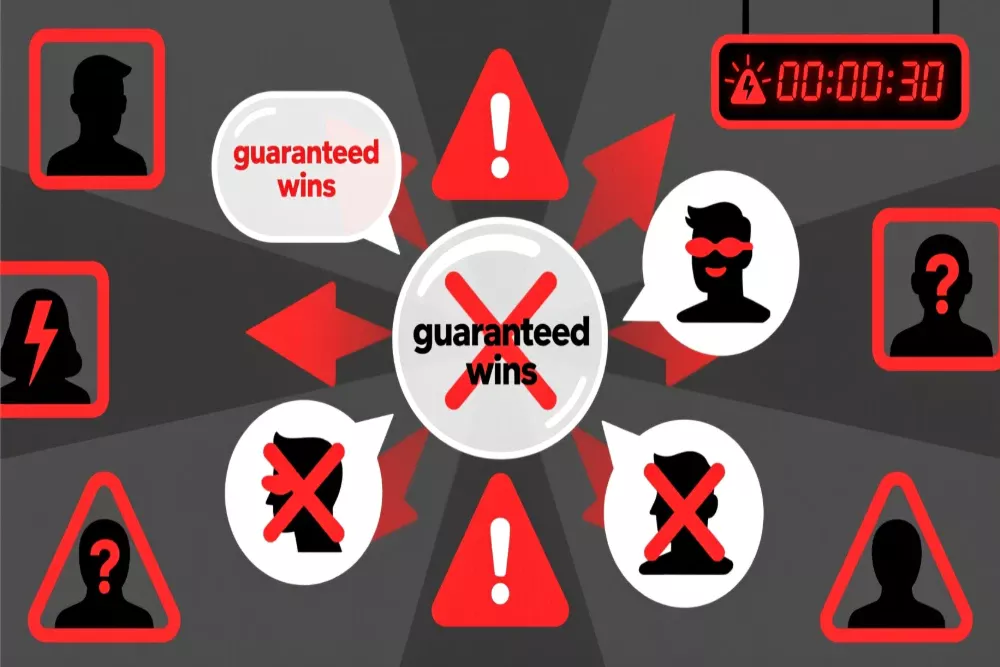
Certain red flags should trigger immediate rejection of a tipster regardless of any other factors. These warning signs are so strongly correlated with fraudulent or worthless services that you can safely ignore any tipster displaying them, saving yourself time and protecting your bankroll.
Guaranteed wins or promised win rates above seventy to eighty percent are mathematical impossibilities in efficient betting markets. Professional sports betting involves wagering against sophisticated bookmakers who employ teams of analysts, build complex models, and adjust odds based on betting patterns. The idea that someone consistently beats these odds at rates approaching certainty is absurd. Anyone claiming guaranteed profits or win rates in the ninety percent range is either delusional or deliberately lying. Neither helps your bankroll.
The mathematics of betting ensure that even the sharpest professional bettors experience extended losing streaks. Variance is fundamental to outcomes involving probability and uncertainty. A legitimate expert might achieve five to ten percent ROI over thousands of bets, which is excellent performance but translates to winning perhaps fifty-five percent of bets at typical odds. Claims of near-perfect records indicate either fraud or cherry-picked reporting of a lucky variance spike that won’t continue.
Pressure tactics designed to create artificial urgency reveal scam operations. “Bet now before the odds change” or “limited spots available in our VIP group” or “this tip won’t be available for long” are sales techniques imported from high-pressure marketing, not legitimate betting intelligence. Real value either exists or doesn’t, and it doesn’t require manufactured urgency to be worth betting on.
These pressure tactics work by triggering emotional decision-making that bypasses rational evaluation. Scammers know that if you actually research their claims and track record, you’ll discover the fraud. They need you to act impulsively before doing due diligence. Legitimate tipsters with genuine track records want you to verify their performance because verification reveals their value. They’re confident in their product and willing to let potential customers take time evaluating claims.
Reluctance to provide verifiable track records immediately identifies problematic services. Every legitimate tipster should maintain comprehensive records of every tip issued, including date, selection, odds, stake size, and outcome. These records should be publicly available or provided to potential customers without resistance. Tipsters who refuse to share complete historical records, who only showcase winning periods while hiding losing stretches, or who claim privacy concerns prevent transparency are hiding poor performance.
The verification should include time-stamped evidence that tips were issued before matches started, not posted retroactively. Some scammers screenshot winning bets after results are known while ignoring losing bets. Legitimate tipsters timestamp predictions publicly or use third-party verification services that independently confirm tip timing and outcomes.
Fake testimonials and reviews plague the betting tips industry. Scammers create elaborate websites filled with glowing testimonials from supposedly satisfied customers. They post fake reviews on their own platforms and sometimes even on supposedly independent review sites. Learning to identify fabricated social proof prevents falling for these manipulations.
Real testimonials include specific details about the customer’s experience, mention both positive and negative aspects, and feel authentic rather than sounding like marketing copy. Fake testimonials tend to be vague, overly enthusiastic, and professionally written. They often include phrases like “I was skeptical at first but…” or “I’ve tried many services and this is the best” that appear in template testimonials across multiple scam services. Search for quoted phrases from testimonials online and you’ll sometimes find the exact text appears on multiple unrelated websites, revealing the fraud.
Unrealistic profit claims in advertising materials signal scam operations. “Turn one hundred dollars into ten thousand in a month” or “I make twenty thousand dollars weekly from betting” or similar claims about extraordinary returns are designed to exploit greed while being mathematically implausible. Professional bettors with genuine long-term profitability understand that sustainable returns involve grinding small edges over thousands of bets. Anyone promising quick riches through betting tips is selling fantasy, not expertise.
Anonymous operators hiding behind pseudonyms without any verifiable real-world identity should raise suspicion. Legitimate tipsters with valuable expertise typically use their real names and build reputations they want associated with their identity. Operators hiding behind anonymous accounts or using obviously fake names have less accountability and can disappear without consequences when their scam collapses.
Lack of transparency about methodology represents another warning sign. Quality tipsters explain their general analytical approach even while keeping specific selection criteria proprietary. They describe whether they use statistical models, fundamental analysis, information edges, or other methods. Services that refuse to explain anything about their approach and claim “secret systems” are usually hiding the fact that no systematic methodology exists.
Verification Methods That Actually Work
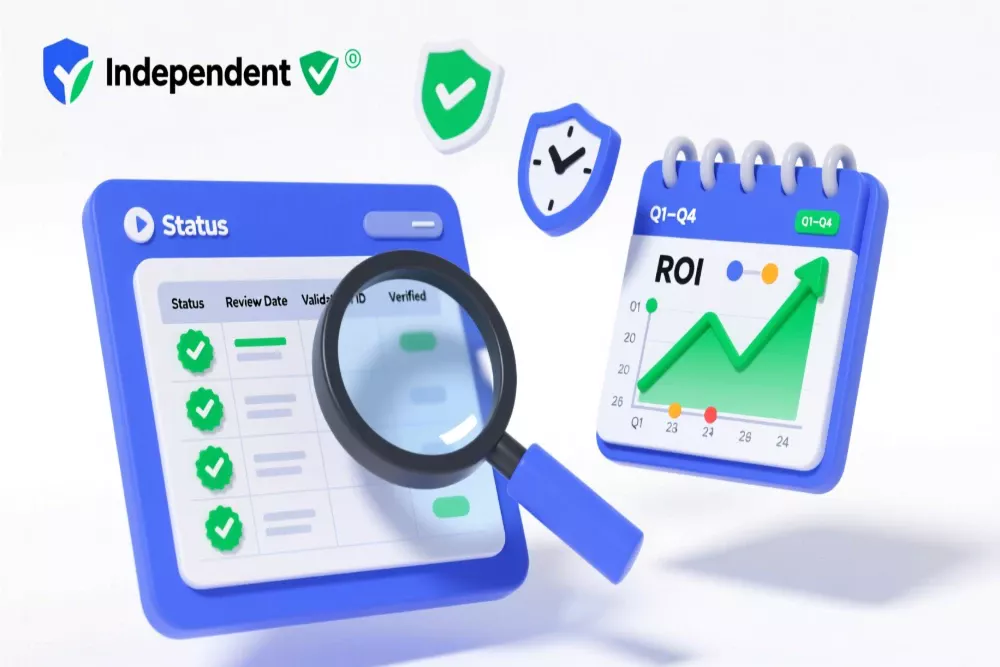
Moving beyond red flags that eliminate obvious scams, you need positive verification methods that identify genuinely skilled tipsters worth following. These techniques require more work but dramatically improve your chances of finding legitimate betting intelligence among the noise.
Manual tracking over trial periods provides the most reliable verification you can perform. Rather than trusting self-reported results, you track every tip from a source yourself over a meaningful sample size. Sign up for the free trial period many paid services offer, or simply follow a free tipster for several weeks or months. Record every tip with date, selection, odds, and eventual outcome in your own spreadsheet.
This manual tracking has several advantages. First, you verify results independently rather than trusting potentially falsified claims. Second, you experience the actual service customers receive rather than polished marketing materials. Third, you collect data on factors beyond just win rate, like average odds, bet frequency, and whether tips arrive with enough advance notice to actually bet them at quoted odds.
The sample size requirements for meaningful verification are larger than most bettors realize. Twenty or thirty bets tells you almost nothing about genuine skill versus luck. Even a completely random tipster will sometimes have impressive short-term results purely by variance. You need at least one hundred tips minimum, preferably several hundred, before results become statistically meaningful.
Calculate return on investment rather than focusing on win rate. ROI measures actual profit or loss as a percentage of total stakes across all tips. A tipster with sixty percent winners at average odds of 1.70 might have worse ROI than a tipster with forty-five percent winners at average odds of 3.00, because the second tipster’s wins pay out more relative to losses. Track the ROI you would have achieved following tips at the odds available when tips were issued, since that reflects the actual opportunity.
Independent verification platforms provide another valuable tool. Services like Blogabet, Pyckio, and others allow tipsters to post tips in advance, which the platform timestamps and tracks automatically. These platforms prevent retroactive posting and selective reporting, making track records more trustworthy than self-reported claims on tipster websites or social media.
When evaluating a tipster who uses verification platforms, check several factors. How long has their track record run? Longer is better, since lucky streaks eventually regress to the mean. What’s their overall ROI across all tips? Ignore claimed ROI on cherry-picked subsets like “best bets” or specific sports if the overall performance is mediocre. How consistent are results over time? A tipster profitable over three years with no losing months has more credible skill than someone who had one excellent year followed by two mediocre ones.
Statistical analysis of track records reveals whether performance likely reflects skill or luck. If a tipster has issued five hundred tips with fifty-five percent winners and average odds of 2.00, you can calculate whether that performance is statistically significant or could easily occur by chance. Various online calculators help assess statistical significance if you’re not comfortable with the mathematics yourself.
The key concept is that random results produce variance around expected values. A perfectly average tipster making five hundred bets at even odds would expect to win about two hundred fifty bets, but actual results might range from two hundred thirty to two hundred seventy purely by luck. If the tipster claims three hundred winners from five hundred bets, that result is much less likely to occur randomly and suggests genuine skill. If they claim two hundred sixty winners, that could easily be luck.
Cross-referencing multiple sources of information about a tipster provides triangulation that’s harder to fake than any single data point. Search for the tipster’s name or service name along with terms like “scam,” “review,” or “track record.” Read what people say on independent forums and betting communities. Search for their claimed results on verification platforms. Check whether they’ve been discussed on scam-reporting websites or gambling watchdog forums.
Be cautious about reviews on tipster comparison sites, which often earn affiliate commissions and therefore have incentive to recommend everyone. Independent forum discussions where users share actual experiences tend to be more honest, though you need to filter out competitors posting fake negative reviews or associates posting fake positive reviews.
Examining the reasoning behind tips helps verify genuine expertise versus lucky guessing. Quality tipsters explain why they recommend specific bets, referencing relevant statistics, tactical factors, team news, or other analytical support. Tipsters who just post selections without reasoning might be guessing, might be using a model they don’t understand, or might be deliberately hiding weak analysis.
When tips include reasoning, evaluate whether it makes sense. Does the tipster reference factors that actually matter for the outcome? Do they understand the sport and league they’re covering? Do they make logical connections between evidence and conclusions? Spotting sloppy reasoning or factual errors reveals tipsters who lack genuine expertise regardless of what their recent results look like.
Testing tips on paper before risking real money provides a low-risk verification method. Follow a tipster’s recommendations for several weeks or months, tracking what your results would have been if you’d actually bet, but don’t risk real money during the evaluation period. This paper trading lets you assess performance without financial exposure while you decide whether the tipster merits real betting capital.
The challenge with paper trading is maintaining discipline about recording all tips objectively. Don’t cherry-pick only the tips you liked or skip recording tips you would have avoided. That defeats the purpose of verification. Track every single tip as issued, even when you disagree with the reasoning or the bet seems poor.
Understanding Incentive Structures
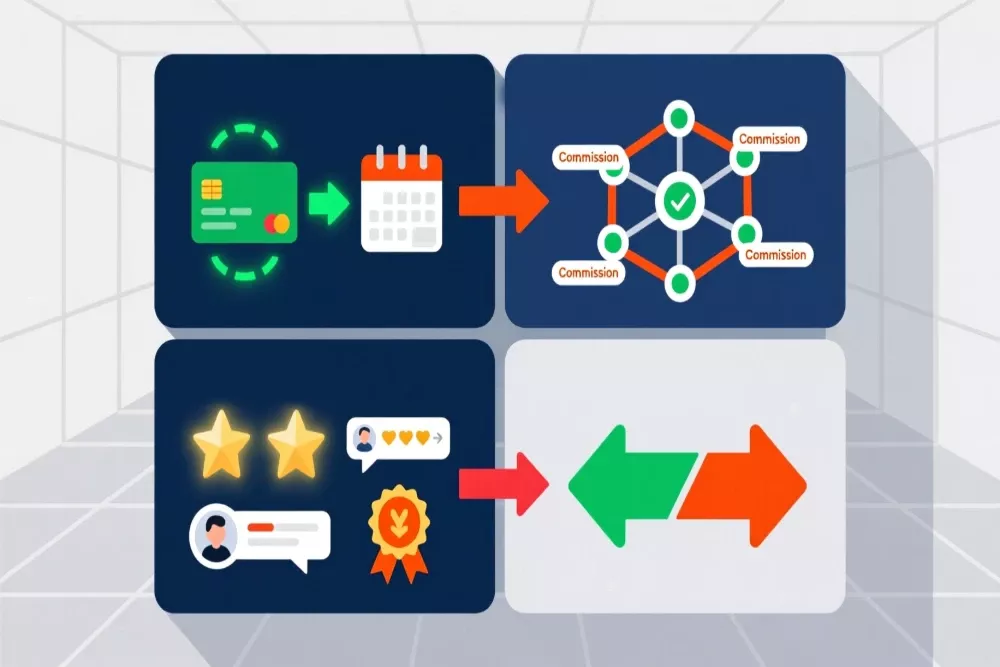
Even with legitimate tipsters who aren’t running scams, their incentive structures shape the tips they provide in ways that often don’t align with your goal of profitable betting. Understanding these incentives helps you interpret tips appropriately and recognize when conflicts of interest compromise tipster objectivity.
Subscription-based tipsters make money from monthly fees regardless of betting outcomes. This creates incentive to maximize subscriber acquisition and retention rather than maximizing betting ROI for customers. The business model rewards marketing savvy, social media presence, and promotional ability more than betting accuracy.
Consider how a struggling subscription tipster faces decisions when their tips aren’t performing well. Honest reporting means acknowledging poor results, which drives subscriber cancellations and threatens their income. Selective reporting or falsification preserves subscribers in the short term. The financial pressure pushes toward dishonesty. Even without deliberate fraud, subscription tipsters face incentive to take excessive risks seeking spectacular results that attract attention, or to tip more frequently than their genuine edge justifies to provide “value” subscribers expect.
The alignment between subscription tipsters and customers isn’t necessarily terrible. Services that build strong reputations over years have incentive to maintain quality since reputation drives long-term subscriber growth. But the fundamental misalignment remains they profit from subscribers, not from betting success. Keep this in mind when evaluating their tips and claims.
Bookmaker affiliate commissions create different incentive distortions. Tipsters who earn money when followers sign up with specific bookmakers through referral links profit from driving signups and betting volume, not from followers winning. This creates pressure to recommend more bets than justified, to tip longshots that lose frequently but feel exciting, and to downplay bankroll management advice that would reduce betting volume.
Some affiliate tipsters genuinely provide quality tips while earning commissions, reasoning that helping followers win keeps them engaged and betting, which generates ongoing commissions. Others prioritize commission maximization over tipster quality and essentially become marketing agents for bookmakers. The presence of affiliate links doesn’t automatically disqualify a tipster, but recognize the conflict of interest and verify performance extra carefully.
Reputation-building represents another incentive that can align with customer interests. Tipsters trying to build long-term reputations as betting experts have incentive to provide quality tips that actually help followers profit, since reputation deteriorates if customers consistently lose money following tips. This creates partial alignment even in subscription or free models.
The catch is that reputation-building only works for tipsters who care about long-term reputation, which excludes scammers planning to operate briefly before disappearing. It also requires transparency that allows reputation to accurately reflect performance, which subscription and social media models often lack.
Building Your Verification System
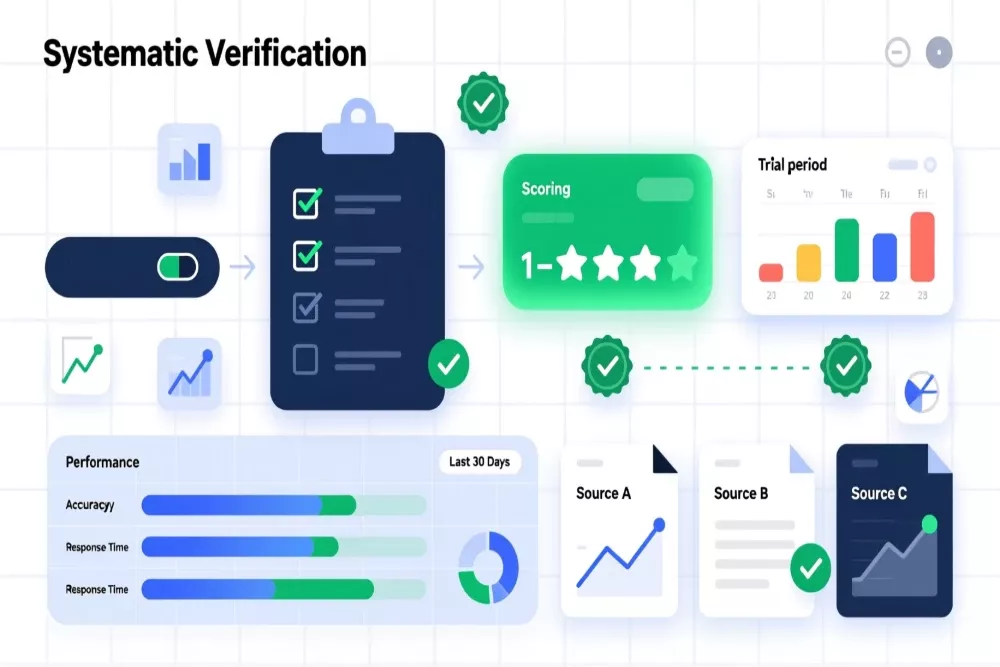
Rather than evaluating each tipster from scratch, build a systematic verification process you can apply consistently. This reduces cognitive load, prevents emotional decision-making, and ensures you check all important factors before trusting tips with your bankroll.
Create a verification checklist covering essential questions about any tipster you’re considering. The checklist should include queries about track record verification, methodology transparency, incentive structures, longevity, and specific performance metrics. Work through this checklist systematically for every potential tipster rather than making gut-feel decisions based on marketing materials or recent results.
A sample verification checklist might include items like: Is there a verified track record covering at least three hundred tips? What’s the overall ROI across all tips? Are tips posted publicly before matches with timestamps? Does the tipster explain their methodology in general terms? What are their business model and incentive structure? How long have they been operating? Are there independent reviews or forum discussions? Can I find any red flags like guaranteed win claims or pressure tactics?
Scoring each checklist item from one to five and calculating total scores helps compare tipsters objectively. Set minimum score thresholds that tipsters must exceed before you’ll follow their tips. This systematic approach prevents rationalization where you overlook concerning factors because you really want to believe a tipster is legitimate.
Implement mandatory trial periods before committing real money or paid subscriptions. Follow any new tipster on paper for at least fifty tips, tracking every recommendation in your spreadsheet with outcomes and ROI. Only after this trial period confirms positive performance do you begin actually betting their tips with small stakes. Only after several months of verified profitability do you consider increasing stakes or paying for subscriptions.
This cautious approach feels slow but protects against common mistakes. Many bettors discover a tipster, get excited about claimed results, immediately start betting their tips with significant stakes, and lose money before realizing the tipster was mediocre or fraudulent. The trial period discipline prevents these expensive mistakes.
Diversification across multiple verified tipsters provides protection against individual tipster variance or deterioration. Even legitimate skilled tipsters experience losing periods. Following several verified tipsters means that when one hits a rough patch, others might be performing well, smoothing your overall results.
Maintain detailed records of every tip you follow from every tipster. This documentation lets you analyze which tipsters actually help your profitability versus which you’re following for bad reasons. Many bettors follow multiple tipsters but never actually calculate which ones contribute positive value. Detailed tracking reveals that you might be profitable overall but one or two tipsters you’re following consistently lose money, dragging down results.
The record-keeping should include tipster name, date, selection, odds, stake, outcome, and profit or loss for every single tip. Export this data monthly to analyze performance by tipster, by sport, by bet type, and by time period. These analyses inform decisions about which tipsters to continue following and which to drop.
Moving Beyond Tipster Dependence
The ultimate goal isn’t finding the perfect tipster to follow blindly. It’s developing your own betting competence while using quality tipsters to supplement your analysis and expose you to perspectives you might miss. Building genuine betting skill means gradually reducing dependence on external sources.
Use quality tipsters as educational resources rather than just following their tips mechanically. When a verified tipster recommends a bet, study their reasoning before deciding whether to follow it. Research the match yourself using the analytical framework discussed in comprehensive betting guides. Compare your analysis to their analysis. Do you reach similar conclusions? If you disagree, who has the stronger argument?
This active engagement transforms tipster following into learning opportunities. You’re not just hoping their tips win; you’re developing understanding of what makes bets valuable and how to identify edge independently. Over time, this process builds your analytical skills until you can generate your own quality betting decisions without external input.
Pay attention to which types of bets and markets your followed tipsters excel in. Perhaps one tipster is particularly skilled at analyzing over/under goals in the English Premier League. Another might have edge on Asian handicaps in international football. These patterns reveal not just which tips to follow but which analytical approaches work in which contexts.
Understanding these patterns lets you borrow proven frameworks while developing your own expertise. If a tipster consistently profits from analyzing expected goals data and defensive records for over/under bets, you can adopt similar analytical approaches while adding your own insights and research.
Test your own betting decisions against tipster recommendations as a calibration mechanism. Before seeing what a tipster recommends, analyze matches yourself and determine what you think offers value. Then check if the tipster agrees, disagrees, or didn’t cover those matches. Over time, tracking this comparison reveals whether your analysis aligns with skilled tipsters or consistently diverges.
Remember that even the best tipsters experience losing periods and eventual edge deterioration. Markets evolve, bookmakers adapt, and approaches stop working. Betting competence requires ability to identify value independently when external sources prove unreliable. Building that competence takes work but provides the only sustainable path to long-term profitability in sports betting.
