
 Available in US
Advanced Betting Strategies: Professional Techniques Explained

The gap between casual sports bettors and professionals isn’t primarily about having better information or predicting outcomes more accurately. Professional bettors succeed through systematic exploitation of mathematical edges using techniques that casual bettors either don’t understand or lack the discipline to implement consistently. These advanced strategies don’t guarantee profits nothing in betting does but they transform betting from essentially gambling into a calculated risk-management enterprise where small edges compound into meaningful returns over time. Refine your edge using expert betting analysis.
Most recreational bettors never graduate beyond basic betting because they’re searching for the next hot tip or the secret system that unlocks easy profits. They jump between strategies based on recent results rather than committing to systematic approaches and giving them time to work through inevitable variance. Professional strategies require patience, emotional control, significant upfront effort to understand and implement, and acceptance that returns will be modest relative to the work involved. These requirements filter out casual bettors who want excitement rather than profits.
This guide explains advanced betting strategies that professional bettors actually use to generate sustainable returns. These aren’t theoretical concepts from gambling textbooks. They’re practical techniques applied daily by sharp bettors who treat sports betting as a business rather than entertainment. Some strategies require substantial capital or access to multiple betting platforms. Others work with smaller bankrolls but demand sophisticated analysis. All require discipline that most bettors simply don’t possess.
Before diving into specific strategies, understand that these techniques amplify existing edge rather than creating edge from nothing. If your fundamental betting approach is flawed if you’re not identifying genuine value or if your bankroll management is reckless advanced strategies will just help you lose money more efficiently. Master the basics first. Ensure you never lose your capital by following our beginner betting markets guide. Establish consistent profitability over meaningful sample sizes. Only then do advanced strategies provide the optimization that takes your betting to the next level.
The other critical prerequisite is accepting that advanced strategies often reduce the entertainment value of betting while improving the financial returns. Arbitrage betting eliminates suspense by covering all outcomes. Value betting might mean passing on exciting matches that don’t offer value while betting on obscure lower-league games. Betting exchanges introduce complexity that makes placing bets feel like administrative work. If you’re betting primarily for entertainment, stick to simpler approaches that maximize enjoyment. These advanced strategies are for bettors who’ve decided that profits matter more than excitement.
Value Betting Systematized
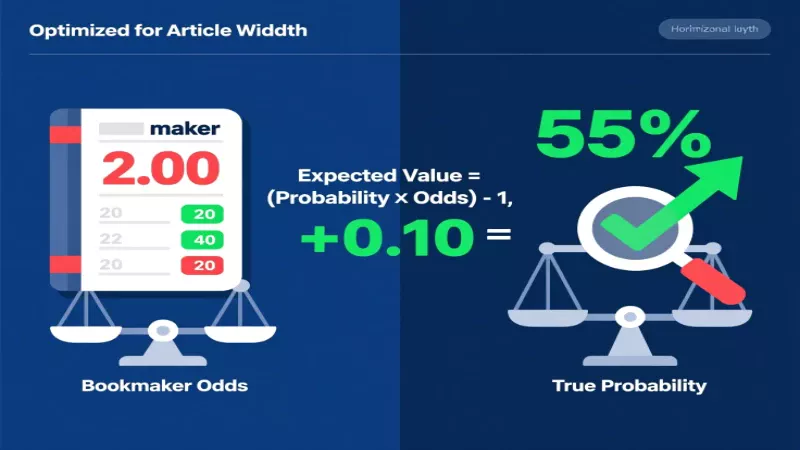
Value betting forms the theoretical foundation of all profitable betting, but most bettors apply it haphazardly rather than systematically. They occasionally identify what they think is value, bet on it, and hope for the best. Professional value betting involves structured processes for identifying mispricings, calibrating probability estimates, and exploiting edges consistently across large volumes of bets.
The core principle is simple: a bet has positive expected value when your estimated probability of an outcome exceeds the implied probability from bookmaker odds. If you believe a team has a forty-five percent chance of winning and bookmaker odds imply only forty percent probability, that five percent edge represents value worth betting. The challenge is that accurately estimating probabilities is extraordinarily difficult, and overconfidence in your estimates leads to betting on false value.
Professional value bettors develop probability estimation through several methods. Some use sophisticated statistical models that process historical data, current form metrics, and relevant context to generate probability distributions for match outcomes. These models require significant statistical expertise to build and continuous refinement as they’re tested against actual results. But properly constructed models can identify probability estimates more accurate than bookmaker odds in specific markets.
Other value bettors rely on deep domain expertise in specific sports or leagues. They follow particular competitions obsessively, understanding team dynamics, tactical approaches, squad situations, and all the factors affecting outcomes better than bookmakers whose attention spreads across dozens of sports and hundreds of leagues. This specialization creates information edges that translate into better probability estimates for matches within their expertise.
The key for both approaches is calibration ensuring your probability estimates actually match reality over large samples. A well-calibrated bettor who says an outcome has sixty percent probability will see that outcome occur approximately sixty percent of the time across many instances. Poor calibration means your confidence doesn’t match accuracy, which leads to betting on false value.
Building calibration requires comprehensive tracking of your probability estimates and outcomes. For every bet you consider, record your estimated probability before checking odds. After the match, record whether your estimate was accurate. Over hundreds of predictions, analyze whether your estimates cluster around true frequencies. If you estimate sixty percent probabilities that only hit fifty percent of the time, you’re systematically overconfident and need to adjust your estimation process.
Odds comparison forms the second critical component of systematic value betting. Having accurate probability estimates doesn’t help if you don’t know where bookmakers have mspriced odds relative to your estimates. This requires monitoring odds across numerous bookmakers to find the best available prices and to identify which bookmakers consistently misprice specific markets.
Odds comparison services aggregate odds from dozens or hundreds of bookmakers, letting you quickly identify who offers the best price for any bet you’re considering. The differences seem small maybe you can bet at 2.10 rather than 2.00 but these margins compound dramatically over large volumes. A bettor consistently getting five percent better odds than they would at a single bookmaker essentially adds five percent to their ROI for free.
Professional value bettors maintain accounts at numerous bookmakers specifically to exploit these odds differences. They accept the administrative overhead of managing multiple accounts because the improved returns justify the hassle. Many also use betting exchanges as another source of odds comparison, sometimes finding better prices than any traditional bookmaker offers.
Market timing adds another dimension to value betting. Odds aren’t static they move based on betting volume, team news, and bookmaker adjustments. Sharp value bettors identify when odds offer maximum value, which often isn’t immediately when markets open or right before matches start. Early odds might be loose because bookmakers haven’t refined them yet. Late odds incorporate all public information and betting patterns but might overreact to last-minute news.
Understanding these dynamics helps you bet at optimal times. If you’ve identified a value bet based on odds available now, do you bet immediately or wait to see if odds improve further? The answer depends on whether you believe odds are more likely to move in your favor or against you based on how the market typically behaves for this type of bet.
Volume is essential for value betting to overcome variance. A small edge of three to five percent on individual bets requires hundreds of bets before the edge reliably manifests in positive returns. Variance means that even betting with consistent edge, you’ll experience extended losing periods. The bettor making twenty value bets per month might have several losing months before the edge shows clearly. The bettor making two hundred value bets monthly sees the edge emerge more quickly through the law of large numbers.
This volume requirement pushes professional value bettors toward less popular markets where bookmakers have looser odds and value appears more frequently. The most bet markets like Premier League match results have razor-thin edges because so much analytical attention refines those odds. Obscure lower leagues or less popular sports offer looser lines and more value opportunities, though finding those opportunities requires research into areas most bettors ignore.
Arbitrage Betting Mechanics

Arbitrage betting eliminates risk entirely by betting on all possible outcomes of an event at different bookmakers whose odds combine to guarantee profit regardless of which outcome occurs. When Bookmaker A offers odds of 2.10 on the home team while Bookmaker B offers 2.10 on the away team and 4.50 on the draw, calculating the inverse of each odds shows whether an arbitrage opportunity exists.
The mathematics involve converting odds to implied probabilities, summing those probabilities, and checking if the total is less than one hundred percent. If Bookmaker A’s home odds of 2.10 imply 47.6 percent probability, Bookmaker B’s away odds of 2.10 imply 47.6 percent, and draw odds of 4.50 imply 22.2 percent, the total is 117.4 percent. That’s overround where bookmakers build in their profit margin. But if you could find home at 2.10, away at 2.15, and draw at 5.00, the probabilities sum to 96.2 percent, creating an arbitrage where you profit regardless of outcome.
Finding arbitrage opportunities requires monitoring odds across many bookmakers simultaneously and acting quickly when mispricings appear. These opportunities arise from bookmakers updating odds at different speeds, from odds compilers making mistakes, or from promotional odds designed to attract customers creating temporary value against market odds at other bookmakers.
The opportunities are typically small, offering one to three percent guaranteed returns. On a one thousand dollar arbitrage, you might profit twenty dollars risk-free. This doesn’t sound impressive until you realize you can potentially place dozens of arbitrages daily if you have accounts at enough bookmakers and software to identify opportunities automatically. The returns compound quickly when you’re making guaranteed profits repeatedly.
Practical arbitrage betting faces several challenges that limit its viability for most bettors. First, you need substantial capital spread across numerous bookmakers to execute arbitrages effectively. If you find an arbitrage requiring a thousand dollars total stake but only have two hundred available at the necessary bookmakers, you can’t exploit it. Most successful arbitrage bettors maintain at least ten thousand dollars spread across twenty or more bookmakers.
Second, bookmakers actively hunt for arbitrage bettors and limit or close their accounts. If your betting pattern shows you only bet when arbitrage opportunities exist and you’re consistently locking in risk-free profits, bookmakers identify you as an arbitrage bettor. They don’t want your action because you’re only betting when you have guaranteed edges. Account restrictions and closures are the inevitable result.
Professional arbitrage bettors extend account longevity through various tactics. They place occasional recreational bets on casino games or popular sporting events at odds that don’t offer value, making their accounts look more like typical recreational customers. They avoid patterns like only betting minutes before events start, which is common for arbitrage. They spread their action across many accounts so no single bookmaker sees concentrated arbitrage betting.
Despite these precautions, accounts eventually get limited for successful arbitrage bettors. The strategy works best as a short-term approach for building bankroll quickly before bookmakers restrict you, or as part of a diversified strategy where arbitrage is one tool among many rather than your sole betting method.
Software and services have emerged that identify arbitrage opportunities automatically and alert subscribers when they appear. These tools charge subscription fees but dramatically reduce the manual work of monitoring odds. The problem is that many bettors use these services, so when an arbitrage appears, many people try to bet it simultaneously. This means odds often move or disappear before you can place your bets, especially if you’re slightly slow to react.
The competitive landscape has made pure arbitrage less profitable than it was historically. Bookmakers have sophisticated technology to identify and correct pricing errors quickly. The proliferation of arbitrage software means more people are exploiting any opportunity that emerges. The margins on most arbitrages have compressed to the point where transaction costs, currency exchange fees, and the time involved barely justify the effort for many bettors.
Matched Betting Systems

Matched betting represents a variation on arbitrage that exploits bookmaker promotional offers rather than simple odds mispricings. The technique involves using free bets, bonus bets, and other promotions in combination with betting exchange lay bets to extract guaranteed profits from bonuses that bookmakers offer to attract customers.
The basic matched betting process starts with a bookmaker promotion, commonly a free bet equal to your initial deposit up to a certain amount. You place a qualifying bet at the bookmaker usually a simple bet on a sports outcome at relatively short odds to meet the promotion requirements. Simultaneously, you lay that same outcome at a betting exchange, which means betting against it occurring.
The back bet at the bookmaker and lay bet at the exchange roughly cancel each other, so you break even or lose a small amount on this initial transaction. But you’ve unlocked the promotional free bet from the bookmaker. You then use that free bet on a selection with longer odds, again laying the outcome at an exchange. The math works so that when the free bet wins, you profit from both the bookmaker payout and the lay bet. When the free bet loses, you profit from the lay bet at the exchange. Either way, you’ve extracted real money from the free bet promotion.
The strategy requires understanding betting exchange mechanics, calculating appropriate lay stakes to balance positions, and finding bookmaker promotions worth exploiting. The calculations become complex because exchanges charge commission on winning bets, free bets typically don’t return the stake along with winnings, and finding suitable events with close odds at both bookmaker and exchange requires research.
Matched betting guides and calculators simplify these calculations, showing exactly how much to stake on back and lay bets to optimize guaranteed returns from promotions. Many matched bettors follow systematic processes of signing up for new bookmakers, exploiting their new customer offers through matched betting, and moving to the next bookmaker once they’ve extracted value from available promotions.
The returns from matched betting can be substantial when you’re working through new customer offers at numerous bookmakers. Each might offer twenty to fifty dollars in bonus bets or free bets, and you can extract eighty to ninety percent of the bonus value as real profit through proper matched betting. Working through twenty bookmaker bonuses might generate five hundred to one thousand dollars in guaranteed profits.
Once you’ve exhausted new customer bonuses, matched betting becomes less lucrative but still viable through ongoing promotions. Bookmakers regularly offer reload bonuses, odds boosts, money-back specials, and other promotions that matched betting can exploit. The returns are smaller than new customer bonuses, but systematic matched betting of ongoing promotions generates steady profits.
The primary limitation of matched betting is account restrictions. Bookmakers don’t intend for their promotions to be arbitraged for guaranteed profits. They expect that some customers will lose their bonus bets, offsetting the winners. Matched bettors who consistently extract value from every promotion while never losing money on regular bets get identified and restricted or closed.
Account longevity strategies for matched betting mirror those for arbitrage place occasional recreational bets, vary your betting patterns, avoid obvious matched betting behaviors like always betting shortly before events start, and spread action across many accounts. But eventual restrictions are inevitable for successful matched bettors.
The strategy works best as a time-limited approach for building initial bankroll. New bettors can work through dozens of bookmaker bonuses in their first months, extracting significant risk-free profits that establish starting capital for other betting strategies. As accounts get restricted, you transition toward strategies that bookmakers tolerate better because they believe they can profit from your action long-term.
Geographic restrictions limit matched betting viability. The strategy works best in jurisdictions with many competing bookmakers offering generous promotions and where betting exchanges operate legally. The UK represents the ideal market for matched betting with dozens of bookmakers, strong competition driving promotional offers, and easy access to exchanges. Restricted markets with few bookmakers and limited exchange access provide fewer opportunities.
Hedging and Liability Management
Hedging involves placing bets that reduce exposure on existing positions, either to lock in guaranteed profit or to limit potential losses. While beginners often view hedging as reducing risk, professional use of hedging is more nuanced it’s a tool for managing liability across complex positions rather than a way to eliminate uncertainty after getting cold feet about a bet.
The classic hedging scenario involves a parlay or accumulator where all selections have won except the final one. You’re one winner away from a large payout. You can hedge by betting against the final selection, guaranteeing profit whether it wins or loses though at a reduced total compared to letting the parlay ride. The decision framework considers whether hedging offers better expected value than letting the original bet stand.
If you’ve built a parlay that will pay one thousand dollars if the final selection wins, and you can hedge by betting two hundred dollars against that selection at odds that will profit five hundred dollars if it loses, you’ve created a choice: guarantee three hundred dollars profit through hedging, or risk losing everything for a shot at one thousand dollars if you don’t hedge.
The mathematically optimal decision depends on the true probability of that final selection winning compared to the odds available for hedging. If the hedge bet offers positive expected value itself meaning the odds on betting against the final selection are better than fair then hedging improves your expected returns beyond the original parlay. If the hedge bet has negative expected value, you’re sacrificing expected value to reduce variance.
Professional bettors rarely face these decisions because they generally avoid parlays and accumulators that create these hedge opportunities in the first place. The lower expected value of parlays due to bookmaker margins applied to each selection makes them suboptimal betting vehicles. But when promotional bets or special circumstances do create multi-leg positions, hedging decisions follow expected value rather than emotion.
Advanced hedging occurs across correlated markets or multiple bookmakers when you’ve identified situations where taking both sides of a bet creates value through odds mispricings or through bonus structures. You might back a favorite at one bookmaker with promotional odds while laying them at an exchange, creating a combined position with positive expected value and limited risk.
In-play hedging provides opportunities during live betting when odds shift dramatically based on match flow. If you bet on an underdog at long odds before the match and they take a surprise early lead, their odds will shorten substantially during the match. You might hedge by betting the favorite at inflated live odds, locking in profit regardless of final outcome. This opportunistic hedging exploits the volatility in live betting markets rather than just protecting pre-match positions.
The key principle is that hedging decisions should be made on the expected value of the hedge bet itself, not on emotions about protecting profits or limiting losses. If the hedge offers positive expected value, make it. If the hedge has negative expected value, don’t make it just because you’re nervous about the original bet. This discipline prevents the common mistake of hedging away value because you’ve gotten scared after making a good bet.
Portfolio hedging across many bets creates different dynamics. If you have dozens of active bets across different sports and markets, your aggregate position might be overexposed to specific outcomes or scenarios. Hedging at the portfolio level means identifying these concentrated exposures and placing hedges that balance your overall risk rather than hedging individual bets.
Professional bettors operating at scale think in terms of portfolio exposure rather than individual bet results. They might have one hundred thousand dollars in active positions across thirty sports and two hundred wagers. The combined portfolio has certain correlation patterns and risk concentrations. Sophisticated hedging manages this portfolio risk without necessarily hedging any particular bet.
Line Shopping and Account Management

Line shopping represents one of the simplest yet most impactful advanced strategies maintaining accounts at numerous bookmakers and always betting at whichever offers the best odds for your selection. The strategy requires no sophisticated analysis or complex calculations. It just demands the organizational discipline to compare odds across platforms before each bet.
The impact compounds dramatically over time. If you consistently get odds five percent better than you would at a single bookmaker betting at 2.10 rather than 2.00, for instance that five percent improvement applies to every bet you place. A bettor making five hundred bets per year with average stakes of one hundred dollars who improves their average odds by five percent generates an extra twenty-five hundred dollars annually from line shopping alone.
The returns increase further when you consider the effect on ROI thresholds. A betting strategy that produces two percent ROI at average odds would be barely profitable after accounting for the time and effort involved. Improve those average odds by five percent through line shopping and that same strategy now produces seven percent ROI, transforming marginal profitability into compelling returns.
Professional line shoppers maintain accounts at ten to twenty bookmakers minimum, sometimes many more. They use odds comparison software that monitors odds across all their available bookmakers and identifies which offers the best price for any bet they’re considering. The software investment and account management overhead pay for themselves many times over through improved returns.
The psychological discipline required for line shopping shouldn’t be underestimated. It’s tedious to check odds at multiple bookmakers before each bet rather than just placing bets at your preferred platform. The differences often seem small enough that you rationalize skipping the comparison for convenience. Professional bettors resist these temptations and shop lines religiously because they understand the cumulative impact.
Account funding strategy matters for effective line shopping. You need adequate bankroll distributed across all your bookmaker accounts so you can place bets wherever odds are best. Keeping all your capital at a single bookmaker defeats the purpose of having multiple accounts. But spreading capital too thin means you sometimes can’t place desired bets at the bookmaker offering optimal odds because you lack sufficient balance there.
The solution involves maintaining base balances at all accounts sufficient for your typical bet sizes, with ability to transfer funds between accounts when needed for larger wagers. Electronic wallets facilitate these transfers more easily than bank transfers to each bookmaker. The logistics require organization but become routine once you’ve established systematic processes.
Bookmaker selection for your line shopping portfolio should consider several factors beyond just odds quality. Betting limits matter some bookmakers quickly limit successful bettors while others tolerate winning action longer. Payment processing speed and reliability affect how quickly you can move funds between accounts. Customer service quality becomes relevant when you’re managing numerous accounts and inevitably face occasional issues.
Geographic restrictions and licensing also matter. The available bookmakers vary dramatically by jurisdiction. Some regions have dozens of competing bookmakers making line shopping highly effective. Other regions have few options or regulatory environments that discourage bookmaker competition. Your line shopping strategy needs to adapt to your available bookmaker landscape.
Arbitrage opportunities frequently emerge from line shopping activity. When you’re consistently monitoring odds across many bookmakers, you’ll occasionally spot pricing discrepancies large enough to bet both sides profitably. These aren’t your primary goal when line shopping, but they represent bonus opportunities that emerge from the infrastructure you’ve built for odds comparison.
Loyalty to specific bookmakers based on past positive experiences or familiar interfaces costs money. Professional bettors have no loyalty they bet wherever odds are best. If a bookmaker you’ve never used before offers significantly better odds than your regular platform, you place your bet there. This mercenary approach maximizes returns by ensuring you’re always getting optimal prices.
Statistical Modeling and Quantitative Approaches

Statistical modeling applies quantitative analysis and mathematical techniques to generate betting predictions more accurate than bookmaker odds. Building effective models requires statistical expertise, programming ability, access to quality data, and rigorous testing methodology. But properly constructed models can identify genuine edges that compound into sustained profitability.
The foundation of statistical betting models is historical data covering the outcomes you’re trying to predict along with the factors that influence those outcomes. For football betting, this might include match results, goals scored, shots, possession, expected goals, team strengths, home advantage, recent form, and dozens of other variables across thousands of historical matches.
The modeling process requires splitting data into training and testing sets. You build the model using historical data from past seasons, then test how it performs predicting outcomes in a recent season it wasn’t trained on. This validation process reveals whether your model has genuine predictive power or whether you’ve just fit noise in the training data without capturing real patterns that generalize to new situations.
The pragmatic approach for most bettors is using simpler statistical models with strong theoretical foundations rather than complex machine learning approaches that are harder to interpret and validate. Linear models, logistic regression, and similar techniques provide transparency about what variables drive predictions and make it easier to diagnose when models start failing.
