
 Available in US
The Best Sports Betting Markets for Beginners

Starting your betting journey feels overwhelming when you open a sportsbook and see hundreds of available markets for a single match. You can bet on the winner, the exact score, first goalscorer, total corners, cards, player props, half-time results, and dozens of other outcomes. Start your journey with sportsbook insights for newcomers. The sheer variety paralyzes new bettors who don’t know where to focus their attention or which markets offer the best opportunities for learning and finding value.
The brutal reality is that most betting markets are traps for beginners. They look exciting and offer attractive odds, but they’re incredibly difficult to predict consistently and the bookmaker margins are enormous. Exotic prop bets and obscure markets exist primarily to attract recreational money from bettors who don’t understand how much edge the bookmaker has built into those odds. Beginners who scatter their attention across many complex markets never develop genuine expertise anywhere and just donate money to bookmakers through unfavorable bets.
The path to betting competence starts with ruthless focus on a small number of beginner-friendly markets where you can develop foundational skills before expanding to more complex betting. These starter markets share several characteristics that make them appropriate for learning. They’re relatively straightforward to analyze without requiring advanced statistical knowledge. They have lower bookmaker margins compared to exotic markets. They offer enough betting opportunities that you can build meaningful sample sizes quickly. And most importantly, the analytical skills you develop in these markets transfer to other betting contexts as your expertise grows.
This guide identifies the best markets for beginners to focus on initially, explains why these markets work well for learning, and provides practical frameworks for analyzing bets in each market. The recommendations assume you’re starting with minimal betting experience and modest bankroll. If you already have some betting background, you might progress through these beginner markets faster, but the fundamental principles still apply regardless of experience level.
The biggest mistake beginners make is trying to bet on everything immediately rather than specializing in specific markets until they’ve developed competence. You can’t become skilled at match result betting, over/under goals, both teams to score, Asian handicaps, player props, and correct score betting simultaneously. Each requires different analytical approaches and different types of knowledge. Focus on mastering one or two beginner-friendly markets before expanding your betting repertoire.
Match Result Betting: The Foundation
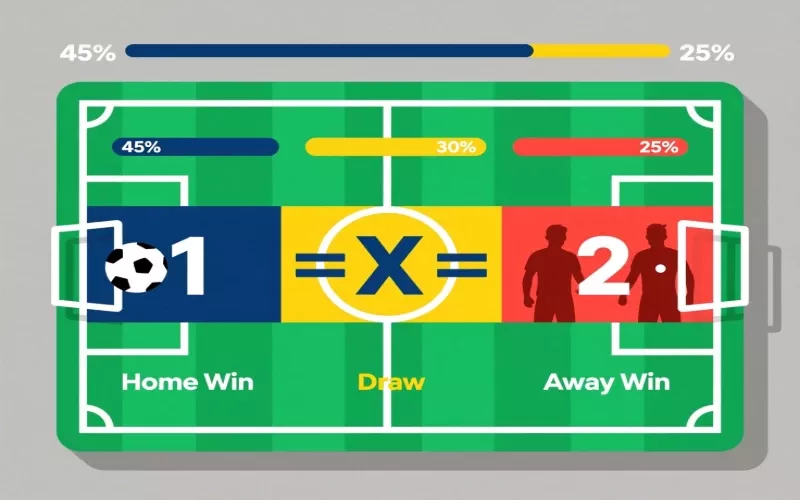
Match result betting, also called 1X2 betting in many markets, represents the most fundamental sports betting market. You’re simply predicting whether the home team wins, the away team wins, or the match ends in a draw. The simplicity makes this market the natural starting point for beginners learning basic betting concepts.
The analytical framework for match result betting builds intuition about how sporting contests actually work. You learn to assess relative team strength, understand home advantage, interpret recent form, and evaluate how various factors combine to affect match outcomes. These skills transfer directly to more advanced betting markets, making match result betting excellent foundation training regardless of where your betting eventually focuses.
The market also teaches fundamental concepts about odds, probability, and value that apply universally across betting. When you see odds of 2.50 on a team to win, you learn that this implies roughly forty percent probability. You develop intuition about when odds seem too long or too short relative to actual chances. You experience how variance affects results and why losing streaks happen even when you’re making good bets. All of this foundational learning happens naturally through match result betting.
Starting with match result betting doesn’t mean it’s easy to profit from this market. The efficiency of major football leagues means odds are tightly priced with small edges available. But the learning value justifies focusing here initially even if you’re not immediately profitable. The analytical skills and betting discipline you develop through match result betting enable success in other markets later.
The three-way nature of match result betting, with home win, draw, and away win all possible, creates complexity that beginners need to understand. Draws occur more frequently in football than casual bettors expect, typically fifteen to thirty percent of matches depending on league characteristics. Betting on favorites without accounting for draw probability leads to systematic losses as those favorites draw more often than their odds imply.
Understanding draw probability helps you avoid common beginner mistakes like blindly backing favorites at short odds that don’t compensate for draw risk. A favorite might be likely to avoid defeat but much less likely to actually win when draw probability is properly considered. This distinction between “likely not to lose” and “likely to win” becomes clear through experience with match result betting.
Home advantage represents another concept that match result betting teaches effectively. Teams win at home more often than their underlying quality suggests due to factors like crowd support, familiar conditions, and reduced travel fatigue. The magnitude of home advantage varies by league, by team, and by specific circumstances, but understanding its general impact helps you evaluate match result odds more accurately.
Analyzing match results for betting purposes starts with assessing fundamental team quality. Which team has better players, better tactics, better recent form, and better squad depth? This assessment doesn’t require advanced statistics initially. Watching matches, reading match reports, and following team news provides enough information to develop reasonable quality assessments that inform match result betting decisions.
Recent form matters but needs careful interpretation. A team winning their last five matches seems strong, but if those wins came against weak opposition or if the underlying performance wasn’t impressive, the winning streak might not predict future success. Conversely, a team losing recently might have played well and been unlucky, suggesting their results will improve. Match result betting teaches you to look beyond simple win-loss records to underlying performance quality.
Head-to-head history between specific teams provides limited information but shouldn’t be ignored entirely. Some matchups consistently produce certain patterns because of tactical dynamics or psychological factors. But old results with different squads and managers don’t predict current matches very well. Beginners often overweight head-to-head history while neglecting current form and quality, which match result betting experience helps correct.
The mistake beginners make with match result betting is betting too frequently without genuine edge. Every match has odds available, which creates temptation to bet on matches you haven’t thoroughly analyzed just to have action. Professional discipline means passing on most matches and only betting when you’ve identified genuine value through careful analysis. Match result betting teaches this patience through painful experience of losing money on impulsive bets.
Over/Under Goals: Statistical Clarity
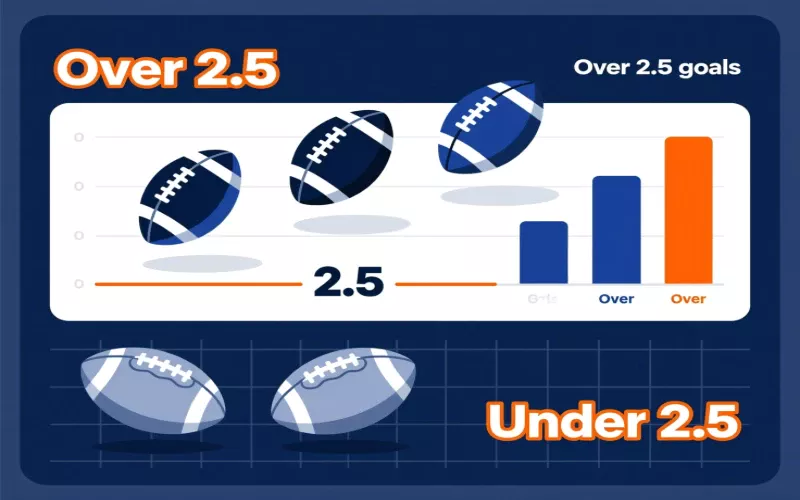
Over/under goals betting focuses on the total number of goals scored by both teams combined, with you wagering whether the actual total exceeds or falls short of the bookmaker’s line. This market offers several advantages for beginners developing analytical skills and statistical understanding of sports betting.
The binary nature of over/under betting simplifies analysis compared to three-way match results. You don’t need to predict which team wins or worry about draw probability. You’re just forecasting whether the match will be high-scoring or low-scoring relative to the bookmaker’s expectations. This narrower analytical focus helps beginners develop skills without the complexity of evaluating multiple possible outcomes.
Goal-scoring patterns show more statistical stability than match results, making over/under betting more predictable with proper analysis. Teams have characteristic attacking and defensive profiles that persist across seasons. A team that creates many scoring chances will likely produce goals consistently. A team with defensive weaknesses will probably concede regularly. These patterns create the foundation for profitable over/under betting.
The analytical approach for over/under betting introduces beginners to advanced statistics that become increasingly important as betting sophistication grows. Expected goals data measures the quality of chances teams create and concede, providing better insight into likely future scoring than actual goals which include random finishing variance. Learning to use xG and similar metrics for over/under betting builds statistical literacy that applies across all betting markets.
Understanding both teams’ attacking and defensive tendencies forms the core of over/under analysis. A match between two teams with strong attacks and weak defenses will likely see more goals than the bookmaker line if the odds don’t fully account for this combination. A match between defensive teams that prioritize organization over attack will probably stay under even modest goal lines.
Tactical matchups matter significantly for goal totals. Two teams that both press aggressively create open, chaotic matches with space that tends toward higher scoring. A team that presses high facing opponents who defend deep and counter-attack produces different dynamics. Understanding these tactical interactions helps predict whether matches will be open or tight, which determines goal expectancy.
Weather conditions affect goal totals in outdoor sports more than most betting markets. Heavy rain makes pitches slower and reduces passing accuracy, generally lowering scoring. Strong wind affects shooting and passing, though the directional advantage might balance out across the match. Extreme heat impacts player stamina and might reduce scoring in later match periods. Beginners learn to incorporate these contextual factors through over/under betting experience.
The bookmaker’s goal line provides clear feedback about whether your analysis is better than the market. If the line is 2.5 goals and you believe 3.2 goals is more likely based on your analysis, you have a clear over bet. If you estimate 2.0 goals is more realistic, the under offers value. This clarity helps beginners understand when they’ve identified genuine betting opportunities versus when they’re just guessing.
Common beginner mistakes in over/under betting include overweighting recent results without considering the quality of opponents faced, ignoring defensive statistics while focusing only on attacking metrics, and betting overs too frequently because high-scoring matches are more exciting. Experience with over/under betting teaches you to analyze both attack and defense, to look beyond recent results to underlying performance, and to bet under when analysis suggests low scoring even though those matches are less entertaining.
The market also teaches proper interpretation of odds and lines. A 2.5 goal line with over priced at 1.90 and under at 1.95 tells you the bookmaker expects slightly under 2.5 goals on average but has built margin into both sides. Understanding these dynamics helps beginners recognize when odds offer value versus when the bookmaker margin makes both sides unattractive.
Starting with over/under betting in one specific league helps you develop expertise through pattern recognition. Following a single league closely lets you understand its typical scoring patterns, which teams consistently produce high or low-scoring matches, and which tactical matchups create goal-fest games versus defensive struggles. This specialization builds competence faster than trying to bet over/under across many leagues where you lack deep knowledge.
Both Teams to Score: Binary Simplicity

Both teams to score betting, commonly abbreviated as BTTS, offers binary yes-or-no wagers on whether both teams will find the net during the match. The market’s popularity stems from providing reasonable odds on outcomes with roughly fifty-fifty probability in many matches, and from maintaining interest throughout matches regardless of which team is ahead.
The binary structure makes BTTS ideal for beginners developing probability estimation skills. You’re forecasting a single yes-or-no outcome rather than choosing between multiple possibilities or predicting specific score lines. This simplicity lets you focus on analytical fundamentals without complex outcome trees or correlated possibilities complicating your thinking.
BTTS betting rewards focus on defensive vulnerability more than attacking strength. Two teams might both have good attacks, but if one defends solidly, BTTS becomes less likely because the strong defensive team might shut out opponents. Conversely, two mediocre attacks can reliably produce BTTS if both teams have defensive problems that opponents exploit. This emphasis on defense teaches beginners to analyze all aspects of team performance rather than just focusing on goals scored.
The analytical framework for BTTS starts with examining both teams’ defensive records, particularly goals conceded and expected goals conceded which captures defensive quality better than actual goals. A team conceding frequently suggests they’ll likely give up goals in upcoming matches, which supports BTTS. A team with a strong defensive record makes BTTS less probable even if they face opponents with decent attacks.
Clean sheet rates provide useful data for BTTS analysis. If a team keeps clean sheets in forty percent of matches, they fail to score in roughly forty percent of opponents’ matches, which means BTTS has sixty percent likelihood against them assuming the other team scores. Combining both teams’ clean sheet rates gives rough BTTS probability estimates, though you need to adjust for the specific matchup rather than just using general rates.
Tactical matchups matter significantly for BTTS outcomes. Some matchups consistently produce goals at both ends because tactical approaches leave both teams vulnerable. A team that commits numbers forward on attack will leave defensive gaps that opponents exploit. If both teams play this way, BTTS becomes very likely. A team that defends deep and organized might frustrate opponents while offering minimal attack, reducing BTTS probability.
Motivation and match context affect BTTS likelihood in ways beginners learn through experience. A team needing a win to avoid relegation might commit numbers forward desperately even at the cost of defensive stability, increasing BTTS chances. A team protecting a lead might park the bus and make it very difficult for opponents to score, reducing BTTS probability in that second half even if the first half was open.
Common mistakes beginners make with BTTS include backing it in mismatches where the favorite will likely score but the underdog might not create any chances, betting BTTS based on both teams having good attacks without considering defensive quality, and overweighting recent BTTS results for each team without analyzing whether the underlying factors persist. Experience corrects these errors through feedback of losing money on poorly reasoned BTTS bets.
The market teaches probability thinking clearly because BTTS odds directly reflect estimated probability. Odds of 1.90 on BTTS yes suggest roughly fifty-three percent likelihood. Odds of 2.10 suggest forty-eight percent. These probabilities are easy to interpret and compare to your own probability estimates, helping you develop the value identification skills essential for all profitable betting.
BTTS betting also introduces concepts of correlated outcomes that become important in more advanced betting. If a match sees early goals, BTTS becomes more likely because the losing team will push forward seeking an equalizer, creating chances for both sides. If a match stays 0-0 deep into the second half, BTTS becomes less likely as teams tighten up defensively. Understanding these in-play dynamics builds sophisticated thinking about how match flow affects outcome probabilities.
Starting with BTTS in leagues you follow closely provides the contextual knowledge needed for good analysis. Understanding team tendencies, typical tactical approaches, and squad situations in a specific league helps you evaluate BTTS probabilities more accurately than trying to bet BTTS across many leagues where you lack detailed knowledge.
Double Chance: Training Wheels for Betting

Double chance betting lets you cover two of the three possible match outcomes with a single bet. You might bet on home win or draw, away win or draw, or home win or away win, covering two-thirds of possible results. The reduced risk compared to straight match result betting makes double chance useful for beginners developing confidence, though the odds are shorter to reflect the increased coverage.
The market provides psychological comfort for beginners worried about the variance in straight match result betting. Knowing that your bet wins if either of two outcomes occurs reduces anxiety about individual results and helps you focus on analytical process rather than being devastated by every loss. This psychological benefit justifies using double chance initially even though the lower odds reduce potential returns.
Double chance teaches important concepts about hedging and risk reduction in betting. You’re seeing firsthand how covering more outcomes reduces your risk but also reduces your potential profit. This trade-off between risk and reward appears throughout betting in various forms, and experiencing it through double chance provides intuitive understanding that proves valuable as your betting advances.
The analytical framework for double chance largely mirrors match result betting but with less precision required. If you believe a team will probably win but draw is also reasonably likely, betting home win or draw captures both positive outcomes without requiring precise probability estimates that distinguish between win and draw chances. This forgiveness makes double chance appropriate for beginners still developing analytical skills.
Understanding when double chance offers value requires comparing the odds to what you’d get betting both outcomes separately. If home win is 2.20 and draw is 3.50, betting both separately requires dividing your stake and produces combined returns that you can compare to the double chance odds offered. If double chance is priced generously relative to the component odds, it offers value. If it’s priced tightly, you’re better off betting the individual outcomes or passing entirely.
The market works particularly well for betting on strong favorites in situations where draws are possible but unlikely defeats. A top team facing weaker opposition might be priced at 1.30 to win outright, which offers terrible value even if they’re overwhelming favorites. But home win or draw at 1.10 might be reasonable value given the tiny chance of them actually losing. This approach limits downside while accepting modest returns.
Beginners often misuse double chance by betting it on matches where they genuinely believe one outcome is most likely. If you think the home team will win, bet on home win rather than home win or draw. The reduced odds on double chance aren’t worth the false security of covering the draw when you don’t actually expect it. Double chance works best when you genuinely see two likely outcomes and want to cover both efficiently.
The market also teaches beginners about odds construction and bookmaker margins. By comparing double chance odds to component match result odds, you can see exactly how bookmakers build margin into combined bets. This transparency about how bookmakers profit helps beginners understand that every bet includes built-in edge for the house that you need to overcome through finding genuine value.
As beginners gain confidence and analytical skill, they should transition away from double chance toward single outcome betting where odds offer better value. Double chance serves as training wheels that help you start betting without excessive variance, but eventually you remove the training wheels and bet on specific outcomes you’ve analyzed thoroughly. The market isn’t meant as a permanent betting home but as a stepping stone toward more profitable approaches.
Draw No Bet: Controlled Risk Introduction
Draw no bet eliminates the draw outcome by refunding your stake if the match ends level, meaning you only win if your selected team wins outright and only lose if they lose. The market provides another form of risk reduction that helps beginners manage variance while learning to analyze matches and make betting decisions.
The psychological benefit of draw no bet is knowing that the most frustrating outcome your team dominating a match but drawing doesn’t lose you money. Beginners frequently experience backing favorites who control matches but can’t find the winning goal, ending in draws that feel like bad luck. Draw no bet removes this frustration by returning stakes when draws occur.
The odds on draw no bet fall between the straight match result odds and double chance odds, reflecting the reduced risk. If a team is 2.00 to win outright, they might be 1.50 on draw no bet. The odds reduction compensates the bookmaker for returning stakes on draws. Understanding this pricing helps beginners see how different bet structures price different levels of risk.
Analytical frameworks for draw no bet closely match match result betting but with additional focus on whether draws are likely. If you’re considering backing a favorite on draw no bet, assessing draw probability becomes crucial. If draws are very likely in this matchup, draw no bet offers poor value because you’re paying substantial odds reduction for protection that will frequently trigger. If draws are unlikely, draw no bet provides useful insurance at reasonable cost.
The market teaches beginners about tactical situations that promote draws versus situations that make draws unlikely. Matches between evenly matched defensive teams produce draws frequently. Matches where one team dominates on paper might see the underdog defend desperately and grind out draws. Understanding these dynamics helps you evaluate when draw no bet protection is worth the reduced odds versus when you should just bet the straight result.
Draw no bet works well for betting on strong teams in matches where they should win but occasional upsets happen. Instead of backing the favorite at short odds like 1.40 where draws feel like disasters, draw no bet at 1.25 provides peace of mind that at worst you get your stake back if they draw. For beginners building confidence, this reduced variance helps them continue betting through the inevitable periods of bad luck.
The market also introduces concepts of effective odds that become important in more advanced betting. When you bet draw no bet at 1.50, your effective odds depend on how often draws occur. If the team draws thirty percent of matches, your stake gets returned thirty percent of the time, which effectively makes your odds better than the listed 1.50 because you’re getting partial return of capital through the draw refunds.
Common mistakes with draw no bet include using it as a crutch for lacking confidence in your analysis, paying the odds reduction for draw insurance on matches where draws are unlikely, and betting draw no bet on too many underdogs where you’re essentially just getting poor odds on them winning. The market serves specific purposes well but isn’t appropriate for all betting situations.
As with double chance, beginners should graduate from draw no bet toward straight result betting as confidence grows. The reduced odds from draw protection cut into profitability significantly over large samples. Once you’ve developed analytical skills and emotional control to handle the variance in straight betting, the extra value from better odds more than compensates for the draws that will occasionally disappoint.
Building Your Foundation Before Advancing

These beginner-friendly markets match results, over/under goals, both teams to score, double chance, and draw no bet provide the training ground where you develop fundamental betting skills. The progression should be methodical rather than rushing to advanced markets before you’ve mastered basics. Once you master the basics, move on to our advanced betting strategies.
Start with one market in one league. If you follow English football closely, begin with Premier League match result betting. Make small bets while learning to analyze teams, interpret odds, and track results. Continue for at least fifty bets before evaluating performance, because smaller samples don’t distinguish luck from skill.
Add a second market only after demonstrating competence in the first. If match result betting is going well after several months, add over/under goals for the same league. The familiarity with teams from match result analysis transfers directly to over/under betting, helping you progress faster. Continue expanding gradually rather than trying to master everything simultaneously.
Track every bet meticulously with the market type, odds, stake, reasoning, and outcome. Analyze monthly to see which markets are working and which are costing money. This data reveals where your analytical strengths lie and where you should focus effort versus where you should stop betting. Many beginners discover they’re profitable in some markets while losing in others, suggesting specialization rather than diversification.
Resist the temptation to bet on complex markets like correct scores, first goalscorer, or exotic props until you’ve established consistent profitability in basic markets. These advanced markets have enormous bookmaker margins and require sophisticated analysis. Beginners betting them are just donating money while thinking they’re having fun with “interesting” bets.
The patience to thoroughly master beginner markets before advancing separates bettors who eventually succeed from those who perpetually struggle. Most losing bettors bounce between markets chasing recent wins without ever developing genuine expertise. Winning bettors specialize in specific markets where they’ve built real analytical advantages through focused practice and study.
Your betting journey starts with these simple markets, small stakes, and commitment to learning rather than winning immediately. The foundational skills you develop through disciplined focus on beginner-friendly markets create the platform for eventually advancing to more complex betting strategies. But that advancement only works if you’ve built the foundation properly rather than skipping steps in impatient pursuit of profits.
